

Training Load|HRV
Life begins and ends at the cellular level.
Lifestyles are determined by habit. The most insidious aspect of habit is its ability to dull awareness. This is when the mayhem begins…
Heart Rate Variability [HRV] can be a valuable tool for monitoring training load and identifying potential overtraining by reflecting the body’s response to stress, with a decline in HRV potentially indicating a need for reducedtraining intensity or rest.
HRV and training load are interconnected. HRV can indicate the body’s response to training load and serve as a tool for adjusting workouts.
Athletes can use daily HRV to gauge recovery and decide whether to perform a high-intensity workout or opt for lower-intensity activity or rest.
What is HRV?
HRV measures the variation in time between heartbeats, reflecting the autonomic nervous system’s activity and the body’s ability to adapt to stress.
HRV does not directly reflect training load but the body’s response to it, so a high HRV does not necessarily mean high training load, and vice versa.
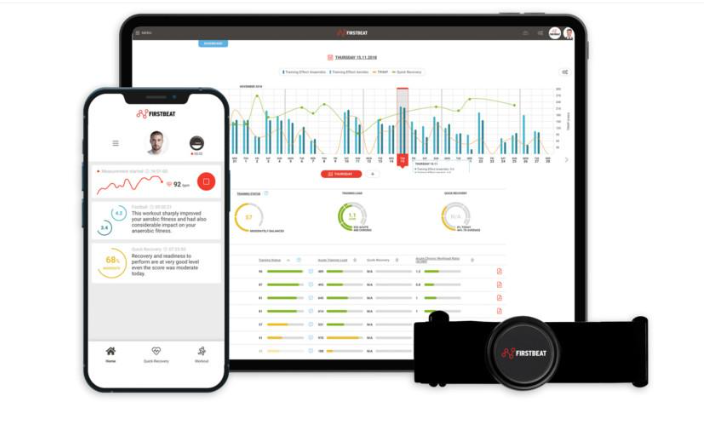
HRV and Training Load:
→ Increased Training Load: A rising HRV trend during a training period suggests the body is adapting well to the stress, while a stagnant or declining HRV may indicate overtraining or a need for more recovery;
→ Monitoring Fatigue: HRV can help identify fatigue and guide training decisions, allowing for adjustments to intensity or duration to prevent overtraining;
Interpreting HRV Trends:
→ Downward Trend: A consistent decline in HRV over several days or weeks could signal overtraining, requiring reduced training volume or intensity;
→ Recovery: A rebound in HRV after a period of reduced training or rest indicates successful recovery and readiness for future training;
→ External Factors: Lifestyle stressors such as sleep and nutrition influence HRV making it important to consider these factors when interpreting HRV trends.
HRV for Training:
→ Track HRV: Monitor HRV regularly, ideally daily, to identify trends and patterns;
→ Adjust Training: Use HRV data to adjust training intensity and volume, prioritizing recovery when HRV is low and increasing intensity when HRV is within normal or increasing range;
→ Listen to Your Body: Combine HRV data with subjective feelings of fatigue and soreness to make informed training decisions.
If our training load increases and your HRV remains within normal or increase it means we are responding well to stress. This confirms that we can take on the load and increase it. HRV should not have a negative correlation with load.
Training load impacts HRV by causing a temporary decrease in HRV after intense exercise, which should recover over time.
Prolonged, high training loads without sufficient recovery can lead to a sustained drop in HRV, indicating overtraining and a higher risk of injury.
A stable HRV during periods of high load may suggest the athlete is adapting well, while a rising trend in HRV during a taper period is a good sign of recovery and improved performance.
Acute Effects of Training Load
→ High-intensity exercise: A single, intense training session can suppress HRV for up to 72 hours post-exercise.
→ Interval vs. constant intensity: Interval training can lead to a slower initial recovery of HRV (in the first hour post-exercise) compared to constant intensity training, likely due to greater sympathetic nervous system activation.

Chronic Effects of Training Load
→ Overload and overtraining: Accumulating high training loads without adequate recovery can cause a chronic imbalance in the nervous system, leading to a sustained, downward trend in HRV over several weeks.
→ Performance and injury risk: A sustained drop in HRV is a key indicator of overtraining and is associated with decreased performance and an increased risk of overuse injuries.
→ Recovery: When training loads are reduced, such as during a tapering period, HRV typically recovers and may even exceed baseline levels, which is associated with improved performance.
Monitoring HRV
→ Individual variation: The relationship between training load and HRV is highly individual. Some athletes may show a stable HRV even with increased training load if they are well-adapted, while others may not.
→ Monitoring: Instead of focusing on daily fluctuations, it is more useful to monitor trends in HRV over several days or weeks.
→ Lifestyle: Other lifestyle stressors, such as poor sleep or high mental stress, can magnify the negative effects of training on HRV.
→Training adjustments: Monitoring HRV in conjunction with training load, athletes and coaches can make informed decisions, such as reducing intensity on days with low HRV, to optimize performance and prevent overtraining.
HRV – Training Load Relationship
→ HRV and stress: HRV reflects the balance between your sympathetic [stress] and parasympathetic [rest and recovery] branches of your nervous systems. A lower HRV indicates the body is under more stress, which can be a result of training, poor sleep, or other life stressors.
→ HRV response: Acute training can cause a decrease in HRV, but a properly managed chronic training load that includes sufficient recovery should not result in a sustained negative HRV trend. An accumulating downward trend in HRV over time can signal overtraining or fatigue.
→ Response load: Post-exercise HRV can be used to assess the acute impact of training. For example, a higher training load can lead to a greater decrease in HRV during the recovery period.
→ HRV adaptation: A rising HRV trend is often a positive sign, suggesting the body is adapting positively to training. This can occur, for example, during a pre-competition taper when training volume is reduced.

Modify Training via HRV
→ High HRV: When your daily HRV is within or above its normal range, it suggests you are well-recovered and can handle a higher-intensity workout.
→ Low HRV: If your HRV is lower than usual, it indicates fatigue. In this case, it is advisable to choose a lower-intensity workout or take a rest day.
→ Stressors: It is important to remember that lifestyle factors like sleep quality and mental stress also impact your total stress load and, therefore, your HRV. If your training load is low but your HRV is still low, it might be due to other stressors.
→ HRV guidance: Use HRV as part of your decision-making process to fine-tune your training schedule, rather than following a rigid, predefined plan. Adjusting your training based on your daily readiness can help optimize performance and reduce the risk of overtraining.
The relationship between HRV and training load is a key indicator of an athlete’s recovery status and ability to adapt to stress.
When training load is increasing and HRV remains stable or increases, it indicates a positive response to training. A decrease in HRV during periods of high training load suggests fatigue and potential recovery issues – which may incite injury.
By monitoring trends in both metrics, coaches and athletes can make informed decisions about reducing or increasing training intensity.
The key to HRV is balance between the two branches of the ANS. Endurance athletes tend to fixate on the HRV score. Stress cannot be eliminated but you can control your nervous system.
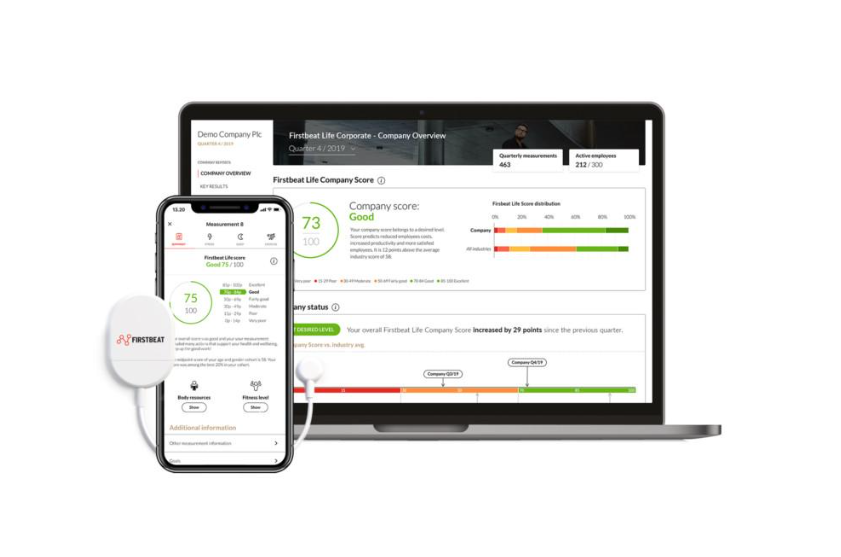
Firstbeat Sports uses a clinical grade HRV device to monitor an athlete’s physiological state and combine it with training load data to guide training decisions.
A good recovery indicated by HRV alongside high training load suggests an opportunity to increase training, while poor recovery with high training load indicates a need to reduce training.
Firstbeat Sports quantifies the internal training load of each session [TRIMP] using beat-to-beat heart rate data, providing a precise measurement that can be tracked against recovery metrics like HRV.
HRV and Training Load Integration | Summary
→ Quantify training load: Firstbeat calculates an internal training load score [TRIMP] for each session using beat-to-beat heart rate data to understand the physiological cost of exercise;
→ Assess recovery: HRV is analyzed from beat-to-beat heart rate data to reflect the state of the ANS and measure recovery status;
→ Monitor trends: The system tracks these metrics over time, often using a four to seven-day rolling average for a more stable measure of recovery than a single daily score;
→ Metrics: Coaches can pinpoint performance needs by comparing training load and recovery trends
→ High load, good recovery: A good time to increase training demands;
→ High load, poor recovery: Reduce training to avoid overtraining is a plausible action;
→ Low load, poor recovery: This may point to poor lifestyle habits or illness;
→ Low load, good recovery: An opportunity to increase the training stimulus
→ An endurance athlete might see a consistent drop in their HRV during a heavy training camp. Firstbeat Sports’ data would show this poor recovery with the high training load;
→ To maintain performance and prevent overtraining, the coach could use this information to reduce the intensity of the next few sessions or incorporate more recovery time;
→ If the athlete’s HRV is consistently high, the system might indicate readiness for a more challenging workout or period of higher training load.
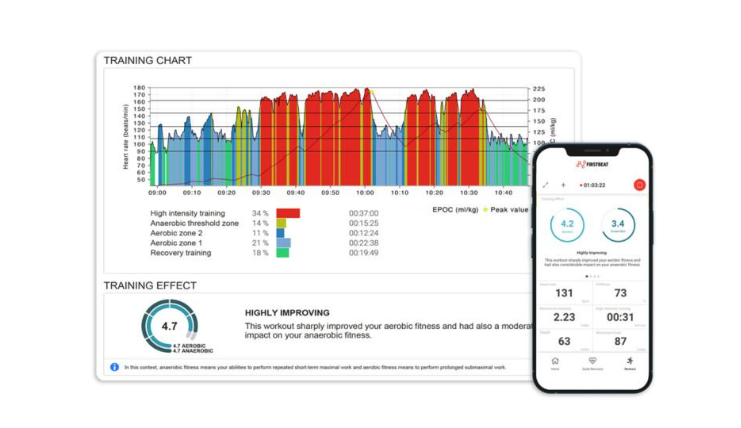
HRV is a key tool for endurance athletes to gauge recovery, readiness, and training effectiveness by measuring the variation in time between heartbeats.
Monitoring daily trends allows athletes to adjust training intensity, with a significant drop indicating a need for rest, while a steady or high HRV suggests readiness for harder workouts.
This HRV-guided approach can improve performance by optimizing the balance between training stress and recovery.
HRV and Endurance Athletes
→ Measures autonomic nervous system (ANS) balance: HRV reflects the balance between the sympathetic nervous system [SNS -“fight-or-flight”] and parasympathetic nervous system [PNS -“rest-and-digest”] branches of the ANS;
→ Indicates stress and recovery: A higher HRV typically suggests better recovery and a higher readiness for training, while a lower HRV can signal fatigue, overtraining, or illness;
→ Customized training: Athletes can use their daily HRV reading to decide whether to push through a hard workout or take an easier one. This allows for a more personalized training plan than a standardized one;
→ Provides long-term insights: Looking at overall trends is more important than a single day’s reading. A downward trend over several days may indicate a need for more recovery, while a quick rebound after a hard training block suggests good recovery.

HRV for Training
→ Track consistently: For the most accurate data, consistently take readings under similar conditions, such as first thing in the morning before getting out of bed.
→ Baseline: Know what is “normal” for you before starting a new training block. A healthy baseline for elite endurance athletes can be high [90-100+] but one’s personal trend is the key ingredient
→ Training adjustments:
→ If HRV is high: Heighten the intensity due to optimal recovery ;
→ If HRV is low: The data suggests more rest is required by reduced intensity or volume.
→ Factors: Use HRV in conjunction with other information, such as how you feel, your sleep quality, and your training load, to get a complete picture.
→ External factors: Sleep, nutrition, stress, and illness can all affect your HRV. Recognizing these external influences helps you interpret the data more accurately
Endurance coaches and athletes erroneously fixate on HRV numbers. Being adept at controlling your nervous system by modulating HRV is the key to transcending health, performance, and longevity in life and sport. The last thing you want is to be fit but unhealthy.
Growth has no endpoint…
We have the technology to eliminate guesswork, decode superhuman, and propel your limitless potential. Challenge yourself today to boldly manifest the keys to your mansion of unparalleled health, performance, and longevity.
A limitless life is a choice…
Find more information at Performance Medicine™.
Schedule a FREE CONSULTATION via the blue widget, our contact form, or 401.207.4215.