Epigenetics | Kinesiology
Life begins and ends at the cellular level.
Kinesiology focuses on the relationship between movement and health. Understanding muscle testing and a holistic approach to health are central ideas in this field.
Kinesiology is the scientific study of human movement, integrating principles from anatomy, physiology, biomechanics, and psychology to understand how the body functions, adapts to exercise, and moves.
The word kinesiology emanated from the Greek word kinesis, meaning movement. Kinesiology is the study of the art and science of human movement. The discipline of kinesiology is dedicated to the study of human movement and physical activity related to sport and exercise.
Kinesiology is a scientific discipline focused on human movement, encompassing various subdisciplines traditionally associated with physical education.
Recognized as an academic and professional field, kinesiology includes areas such as exercise physiology, biomechanics, motor control and learning, sports nutrition, and sports psychology.
Kinesiologists identify and address imbalances in the body. Kinesiologists help endurance athletes optimize their training, prevent injuries, and achieve peak performance.
Here’s a more detailed look at the benefits:
→ Improved Strength and Endurance;
→ Enhanced Flexibility and Range of Motion;
→ Faster Recovery Times;
→ Optimized Training Programs;
→ Injury Prevention;
→ Improved Movement Efficiency;
→ Enhanced Neuromuscular Function;
→ Reduced Fatigue;
→ Increased Cardiovascular Health:
→ Mental and Cognitive Benefits

Kinesiology plays a crucial role in enhancing endurance sports performance by optimizing movement efficiency, designing tailored training programs, and improving recovery strategies.
Understanding the biomechanics, anatomy, and physiology of human movement, kinesiologists can help athletes improve their endurance, strength, and overall fitness.
→ Optimizing Movement Efficiency
→ Designing Targeted Training Programs
→ Improving Recovery Strategies:
→ Addressing Energy Deficiency
Kinesiologists provide the scientific framework and practical expertise to help athletes optimize movement, enhance their training, and improve their overall performance in endurance sports.
Kinesiology is the understanding of how the body functions during exercise, while biomechanics uses principles of physics to improve movement efficiency.
Motor control and learning examine the neurological foundations of skill acquisition, and sports nutrition investigates how the body manages energy from nutrients during physical activity.
Sports psychology and sociology address the mental and social aspects of athletic performance.
It covers a broad range of topics, including exercise physiology, motor control, and sports science, with a focus on optimizing physical health, performance, and rehabilitation.
Kinesiology focuses on how exercise physiology can maximize endurance sports performance, health, fitness, rehabilitation, and research in some of the following realms:
→ Athletic-injury prevention;
→ Biomechanics;
→ Exercise Physiology;
→ Exercise Prescription;
→ Laboratory Methods;
→ Motor Control;
→ Movement Neuroscience;
→ Research Methods;
→ Sports Nutrition;
→ Sports Psychology;
→ Statistics in Kinesiology;
→ Strength and Conditioning;
→ Psychological/Social Aspect;
→ Clinical/Rehabilitation;
→ Enhanced Sports Performance;
→ Health and Wellness Promotion;
→ Design & Engineering;
→ Injury Prevention;
→ Rehabilitation;
→ Stress Management;

Kinesiology aims to improve the quality of life and performance across the human lifespan.
Kinesiology aims to optimize movement, improve performance, and correct compensations through understanding anatomy, biomechanics, and motor control.
Key Aspects of Kinesiology
→ Movement Principles;
→ Functional Anatomy;
→ Biomechanics;
→ Corrective Exercise;
→ Performance Enhancement;
→ Postural Assessment;
→ Functional Training;
→ Injury Prevention
ENDURANCE SPORTS PERFORMANCE
Kinesiology enhances endurance sports performance by optimizing biomechanical efficiency, physiological capacity, and training strategies to delay fatigue.
It combines exercise physiology—focusing on VO2max, metabolic efficiency, lactate threshold—with biomechanics to improve movement economy, reducing energy waste and preventing injuries.
Key kinesiology impacts on endurance performance include:
→ Physiological Optimization:
→ Biomechanical Efficiency;
→ Training Methodologies;
→ Injury Prevention and Recovery
For endurance athletes, kinesiology acts as a bridge between scientific principles of human movement and practical application, optimizing performance from long-distance running to triathlon.
Kinesiology is critical in endurance sports for optimizing performance and preventing injuries through biomechanical analysis, tailored training, and improvements in muscle efficiency.
It enhances stamina by correcting muscle imbalances, improving movement efficiency (e.g., running gait), managing training loads, and supporting recovery, ensuring athletes maintain top form.
Kinesiology helps endurance athletes achieve peak performance by balancing intense training with injury prevention and recovery, utilizing muscle activation techniques to improve stamina.

KINESIOLOGY | BIOMECHANICS
Biomechanics is the study of the structure, function, and motion of biological systems—such as humans, animals, and cells—by applying mechanical principles from physics and engineering.
Kinesiology is the broad scientific study of human movement (physiological, mechanical, and psychological).
Biomechanics is a subdiscipline of kinesiology that focuses specifically on the mechanical forces acting upon the musculoskeletal system.
Kinesiology examines the “why” and “how” of movement, whereas biomechanics provides the technical analysis of structural and functional mechanics.
Kinesiology is the overarching field of human motion, encompassing biomechanics, exercise physiology, motor control, and sports psychology.
Biomechanics zooms in on the technical, structural, and functional aspects of movement, such as torque, force, and joint loading.
Both fields collaborate in rehabilitation, injury prevention, and performance enhancement. Kinesiology understands the broader physiological adaptations, while biomechanics provides the tools to optimize movement efficiency.
Biomechanics analyzes linear and angular motion, statistics, and dynamics of bodily functions.
Movement Analysis Keys:
→ Kinematics
→ Kinetics
Biomechanics analyzes internal/external forces and their effects, aiming to optimize performance, prevent injury, and rehabilitate movement disorders.
KINESIOLOGY | MITOCHONDRIA
Kinesiology and mitochondria are intertwined through the concept of optimizing energy flow and cellular function. Kinesiology, with its emphasis on stress reduction, nutritional assessment, and movement patterns, can indirectly support mitochondrial health.
Mitochondria, the powerhouses of cells, are crucial for energy production, and their function is influenced by stress, nutrition, and exercise.
Find below how kinesiology supports mitochondrial efficiency:
→ Mitophagy;
→ Nutritional Insights;
→ Movement Patterns and Energy Flow;
→ Mitochondrial Biogenesis;
→ Stress Reduction;
→ Fission and Fusion;

EPIGENETIC BIOMARKERS
Epigenetic biomarkers, particularly DNA methylation and histone modifications, mediate exercise-induced adaptations in skeletal muscle and overall health.
In kinesiology, these markers serve as indicators of physiological changes from training, regulating gene expression to improve metabolic function, strength, and combat aging.
Interplay | Epigenetics and Kinesiology
→ Exercise-Induced Adaptations;
→ Biomarker Modification;
→ Epigenetic Clocks;
→ Biological Age;
→ Muscle Adaptation;
→ Monitoring Health
These markers can show how physical, environmental, or lifestyle changes specifically influence metabolic pathways, offering potential for personalized exercise prescriptions.
Epigenetics in kinesiology dictates how exercise, diet, and lifestyle modify gene expression—without altering the DNA sequence—to drive physiological adaptations, muscle memory, and improvements in health.
Key mechanisms, such as DNA methylation and histone modifications, induced by physical activity enhance metabolic, cardiovascular, and musculoskeletal performance, creating “molecular memory” in muscle cells.
Key aspects of epigenetics in kinesiology:
→ Skeletal Muscle Adaptation;
→ Molecular Memory;
→ Performance and Health;
→ Transgenerational Effects;
→ Injury Response
Epigenetic factors are critical biomarkers for predicting an individual’s response to training load, allowing for more personalized exercise prescriptions.
Epigenetics in kinesiology reveals that long-term endurance training induces stable, heritable-like molecular changes [DNA methylation, histone modification] in skeletal muscle that enhance metabolic efficiency and boost, or “remember,” training adaptations, allowing for quicker recovery.
These modifications optimize gene expression related to oxygen consumption, muscle fiber type, and cardiovascular health, shaping an athlete’s physical potential beyond their DNA sequence.
Key Aspects of Epigenetics in Endurance Sports
→ Molecular Memory;
→ Metabolic and Structural Changes;
→ Improved Recovery;
→ Systemic Adaptations;
→ Environmental Propensities

Epigenetic biomarkers are linked to every element in life and sport. Proper gene expression is a big deal. The mayhem begins when a gene is expressed when it should be suppressed or vice versa, and its impact reaches far beyond a subpar training day.
This invites inflammation, chronic and degenerative diseases, accelerated biological aging, senescence, and a plethora of other undesirable outcomes – no matter the endurance athlete’s level of fitness.
Growth has no endpoint…
We have the technology to eliminate guesswork, decode superhuman, and propel your limitless potential. Challenge yourself today to boldly manifest the keys to your mansion of unparalleled health, performance, and longevity.
A limitless life is a choice…
Find more information at Performance Medicine™.
Schedule a FREE CONSULTATION via the blue widget, our contact form, or 401.207.4215.
—————————————
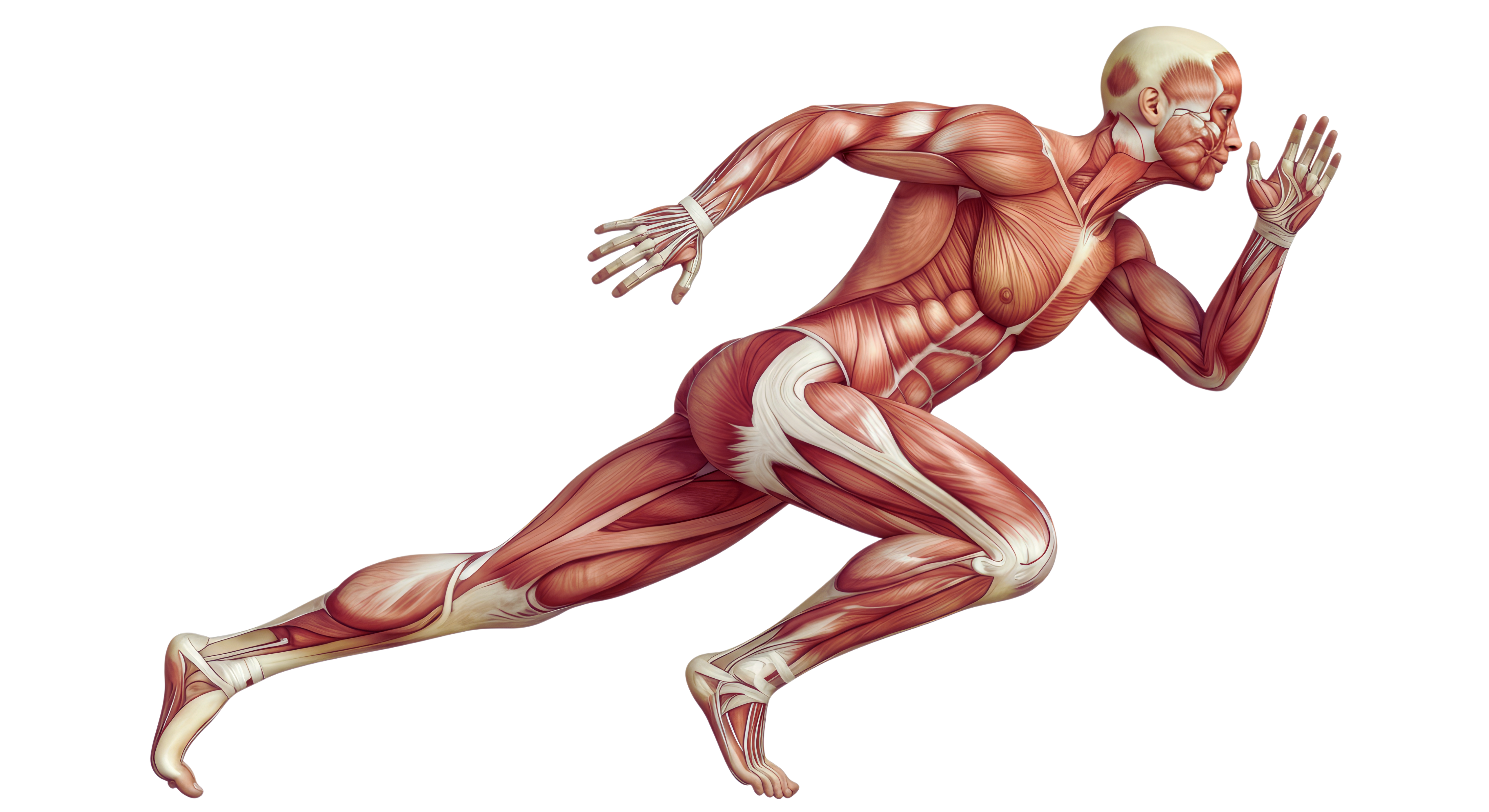
FEATURED IMAGE
Shahid Irfan
File name: vecteezy_the-muscles-of-the-human-body_57321749-scaled.png
File type: image/png
File size: 2 MB
Dimensions: 2560 by 1396 pixels
Original image: vecteezy_the-muscles-of-the-human-body_57321749.png