
EPOC
Life begins and ends at the cellular level.
Lifestyles are determined by habit. The most insidious aspect of habit is its ability to dull awareness. This is when the mayhem begins…
EPOC stands for Excess Post-Exercise Oxygen Consumption. It refers to the increased rate of oxygen consumption that occurs after physical exertion, as the body works to recover and return to its resting state.
How EPOC Works:
→ The body uses oxygen to produce energy during exertion;
→ Intense exercise depletes oxygen stores and creates an oxygen debt;
→ Replenish oxygen stores;
→ Repair muscle tissue;
→ Remove lactic acid;
→ Regulate body temperature
Benefits of EPOC:
→ Increased calorie burn: EPOC can contribute to additional calorie expenditure after exercise, potentially enhancing weight loss efforts.;
→ Improved metabolic health: By increasing oxygen consumption, EPOC may help improve insulin sensitivity and reduce inflammation;
→ Enhanced recovery: EPOC helps the body recover from exercise more efficiently, reducing muscle soreness and fatigue.
Factors Affecting EPOC:
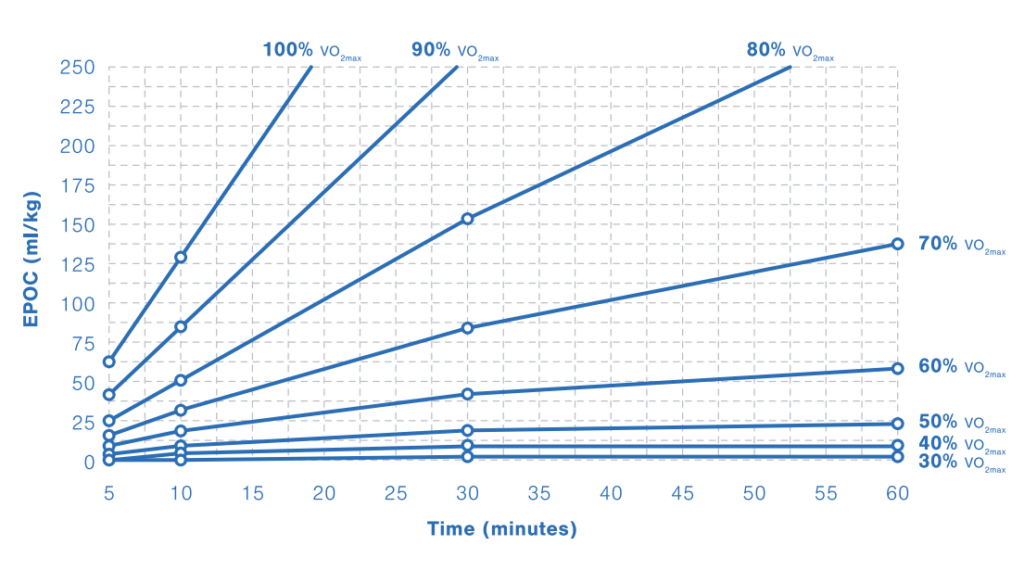
→ Exercise intensity: Higher intensity exercises result in a greater oxygen debt and therefore a higher EPOC;
→ Exercise duration: Longer exercise sessions also increase oxygen consumption and EPOC;
→ Individual fitness level: Fitter individuals may have a lower EPOC due to their more efficient oxygen utilization.
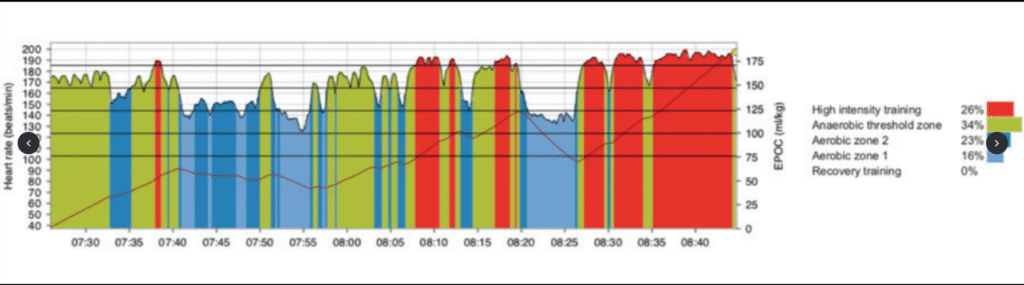
EPOC is a physiological phenomenon that occurs after exercise, where the body continues to consume oxygen at an elevated rate to recover. It can contribute to increased calorie burn and improved metabolic health, but its magnitude is influenced by factors such as exercise intensity and duration.
Training load, particularly EPOC-based, measures the combined strain of your activities over a specific period, like the past 7 days, by quantifying the body’s restorative and adaptive work needed after exercise.
This metric is expertly used in devices like Firstbeat Sports to help you understand the impact of your workouts and adjust your training accordingly. Here is a more detailed explanation:
* Training Load
→ Training load is a metric that reflects the physiological stress your body experiences during training;
→ It’s not just about the volume of exercise [duration, distance], but also the intensity and how hard your body works to recover;
→ It’s often presented as a score or a range, indicating whether your training load is high, optimal, or low
* EPOC and Training Load Connection
→ EPOC refers to the increased oxygen consumption your body needs after exercise to return to a resting state;
→ EPOC is a key indicator of the physiological impact of your activity and the amount of work your body does to recover;
→ Training load, primarily when based on EPOC, reflects the overall EPOC accumulated from your recent activities
* Importance
→ Tracking Progress:
It helps you monitor how your body is adapting to your training;
→ Preventing Overtraining:
It can alert you if your training load is too high and you may be overtraining, leading to fatigue and injury;
→ Optimizing Training:
It can help you adjust your training plan to ensure you’re getting the right balance of intensity and recovery;
→ Understanding Individual Needs:
Individuals have different EPOC responses to the same activity, so understanding your personal training needs is crucial
* Training Load Calculation
→ EPOC Measurement:
Devices like Firstbeat Sports use heart rate data and other physiological information to estimate EPOC;
→ Summation:
The training load is often calculated by summing up the EPOC values of your activities over a specific period;
→ Comparison:
It also compares your current training load to your longer-term training load and your fitness level to provide context.
* Training Load Interpretation
→ High:
Your training load may be too high for optimal results, and you might be overtraining;
→ Optimal:
This range is ideal for maintaining and improving your fitness;
→ Low:
Your training load might be insufficient for your current fitness level and training habits;
→ Other Categories:
Devices often provide more detailed insights, such as aerobic focus (low or high), anaerobic focus, and balanced training.
EPOC-based training load is a valuable tool for monitoring and optimizing your training by quantifying the body’s response to exercise and recovery demands.
Growth has no endpoint…
We have the technology to eliminate guesswork, decode superhuman, and propel your limitless potential. Challenge yourself today to boldly manifest the keys to your mansion of unparalleled health, performance, and longevity.
A limitless life is a choice…
Find more information at Performance Medicine™.
Schedule a FREE CONSULTATION via the blue widget, our contact form, or 401.207.4215.