

Training Load | TRIMP
Life begins and ends at the cellular level.
Lifestyles are determined by habit. The most insidious aspect of habit is its ability to dull awareness. This is when the mayhem begins…
Training Impulse [TRIMP], a metric that quantifies training load based on heart rate and duration, is a common and valuable method for measuring training load.
TRIMP, or TRaining IMPulse, is a method for quantifying aerobic training load by combining training volume [duration] and intensity [heart rate].
It is calculated by multiplying the average heart rate during a workout by the duration in minutes. This helps athletes and coaches understand the physiological stress a workout places on the body and adjust training plans accordingly.
How TRIMP Works:
→ Training Volume: Measured in minutes, representing the duration of the workout;
→ Training Intensity: Measured as the average heart rate [beats per minute] during the workout;
→ Calculation: TRIMP = Training Volume x Training Intensity [bpm].
Example:
If someone runs for 50 minutes with an average heart rate of 140 bpm, their TRIMP would be 50 x 140 = 7000.
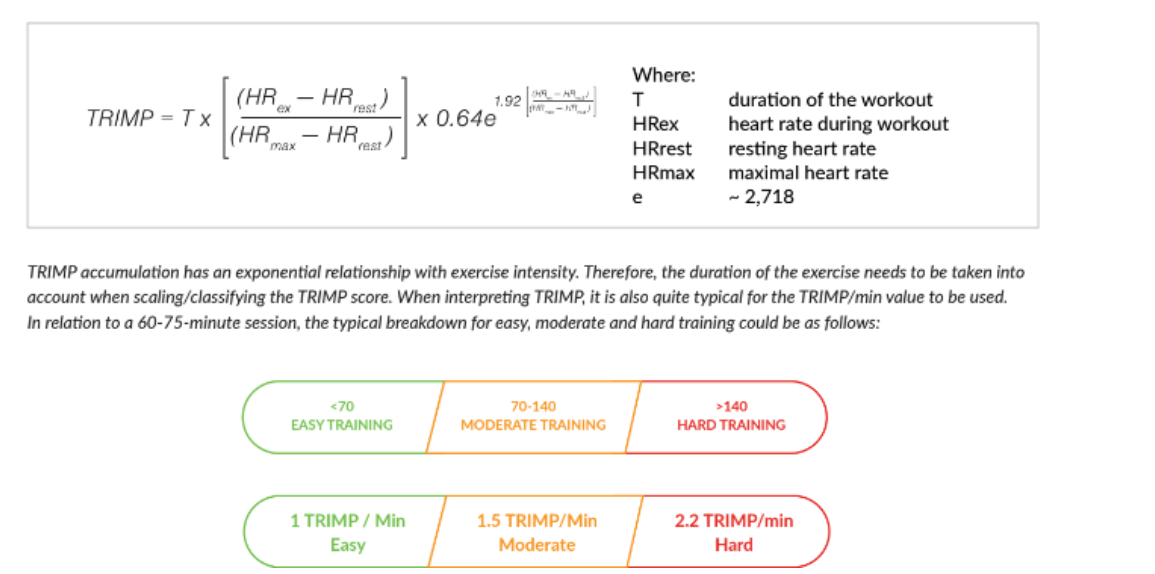
Interpreting TRIMP:
→ TRIMP can be used to track overall training load;
→ The same TRIMP score can be achieved via different combinations of duration and intensity;
→ TRIMP/min [TRIMP divided by session duration] provides context about the intensity of a specific session;
→ TRIMP can be used to calculate Acute:Chronic Workload Ratio [ACWR].
Benefits of Using TRIMP:
→ Quantifies Training Load:
Helps athletes understand the physiological demands of their training;
→ Personalized Training Plans:
TRIMP data can be used to create tailored training plans based on individual needs and recovery;
→ Progress Monitoring:
Tracking TRIMP over time can help monitor progress and identify trends in training response;
→ Injury Prevention:
Understanding training load can help athletes avoid overtraining and potentially reduce the risk of injuries
The Basics:
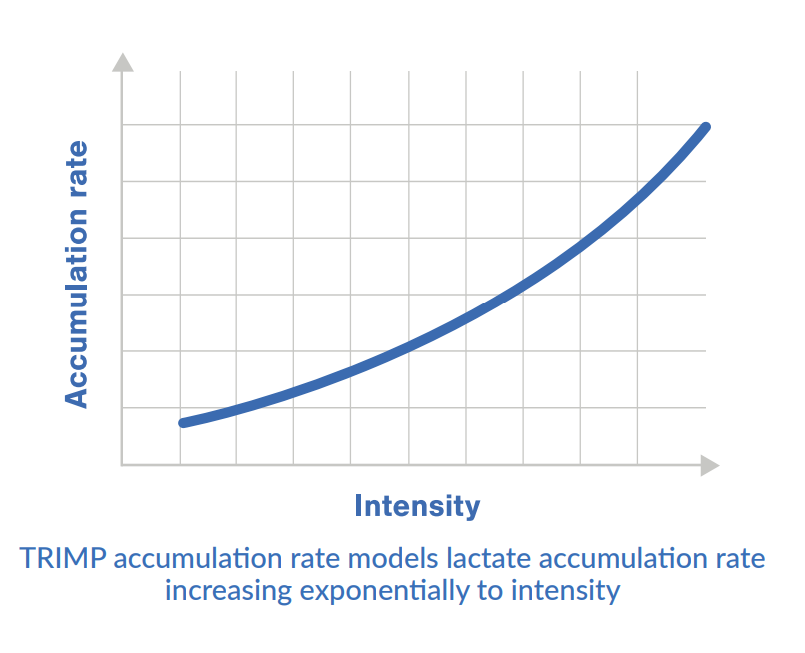
→TRIMP stands for Training Impulse and is a single-number measure of training load that considers both the intensity [calculated by the heart rate reserve method] and the exercise duration.;
→ TRIMP is calculated by multiplying the duration of a training session by a factor representing its intensity, often derived from heart rate data;
→TRIMP helps athletes, coaches, and trainers monitor and manage their training load. It allows for better cycle planning, adequate recovery time, and tailoring training intensity and volume to individual needs;
→ Other methods for measuring training load include TRIMP, session rating of perceived exertion (sRPE), and external load measurements [using GPS technology or accelerometers];
→ Understanding and managing training load is crucial for optimizing athletic performance and preventing overtraining or undertraining.
Two commonly used methods to monitor training loads are the session rating of perceived exertion [sRPE] and the training impulse [TRIMP]. The sRPE method proposed by Foster [1998], considers the overall effort of the training session.
We have the technology to eliminate guesswork, decode superhuman, and propel your limitless potential. Challenge yourself today to boldly manifest the keys to your mansion of unique health, performance, and longevity.
Growth has no endpoint…
We have the technology to eliminate guesswork, decode superhuman, and propel your limitless potential. Challenge yourself today to boldly manifest the keys to your mansion of unparalleled health, performance, and longevity.
A limitless life is a choice…
Find more information at Performance Medicine™.
Schedule a FREE CONSULTATION via the blue widget, our contact form, or 401.207.4215.